
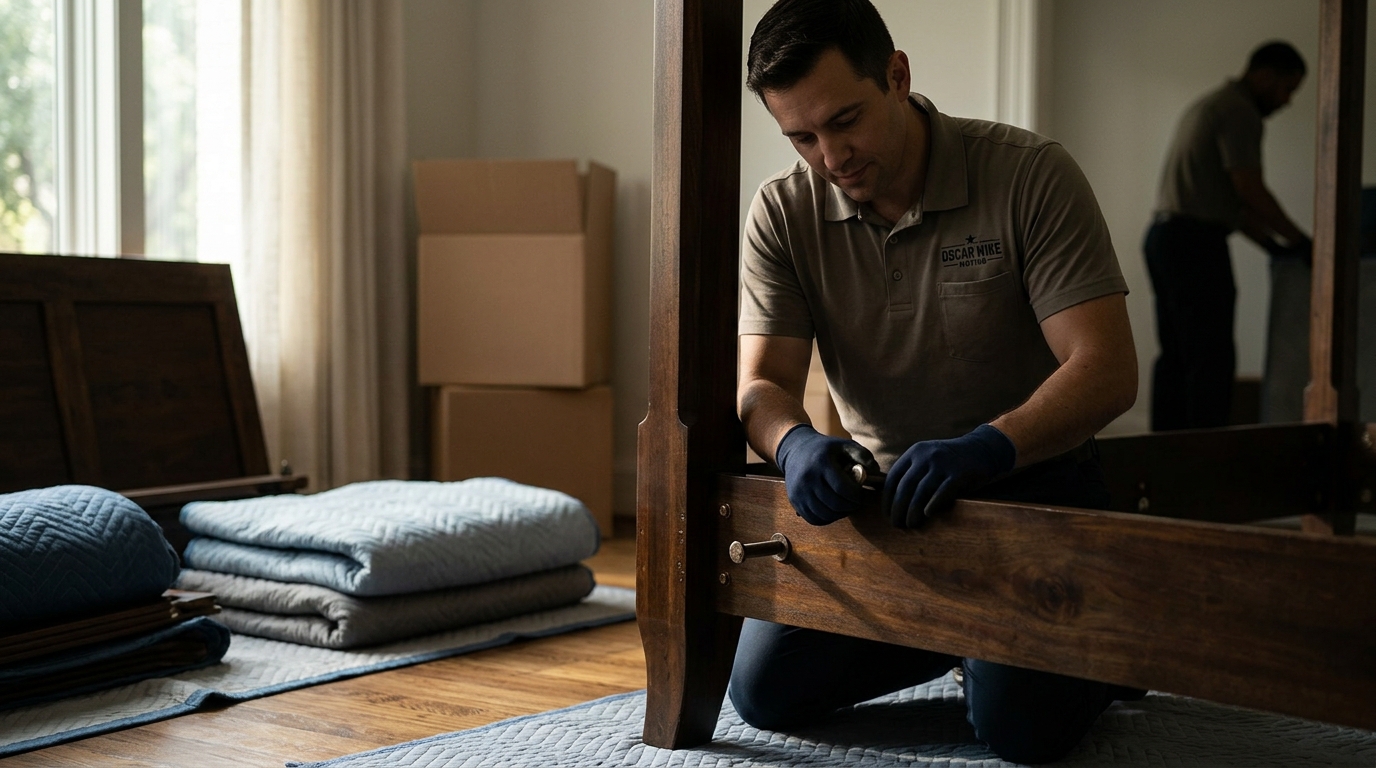
Moving large furniture pieces without proper preparation often leads to damaged floors, broken items, and unnecessary stress. According to industry data from the American Moving & Storage Association, improper handling of bulky items accounts for a significant percentage of residential moving claims. When you attempt to force a wardrobe through a narrow hallway or drag a heavy dresser across hardwood, the risk of structural failure increases dramatically. This guide provides the essential protocols for safely dismantling, protecting, and reassembling your most valuable possessions.
Why Disassembly Matters for Your Move
Disassembly is not merely a convenience; it is a critical component of a safe relocation strategy. Furniture disassembly is the systematic process of taking apart large items to facilitate safe transport and storage. Without this step, you risk damaging the furniture itself, your new home, and potentially injuring yourself or your moving crew.
Large items like king-size beds, sectional sofas, and office desks often cannot fit through standard doorways or stairwells. Attempting to maneuver them without disassembly can result in scratched walls, broken banisters, and snapped joints. Furthermore, disassembled items take up less space in the moving truck, allowing for better weight distribution and securing. This efficiency can reduce the overall time spent on the job, which may lower labor costs for hourly moves.
At Oscar Mike Moving, we prioritize preparation to ensure your belongings arrive in perfect condition. Our team understands that every piece of furniture has unique structural requirements. We review your inventory during the estimate phase to identify items that require specialized disassembly services. This proactive approach prevents last-minute surprises and ensures a smooth transition to your new home.
Essential Tools for Furniture Disassembly
Having the right tools on hand is the first step toward a successful disassembly. Using the wrong tool can strip screws, crack wood, or damage metal fittings. Here is the essential toolkit for any major move:
- Phillips and Flathead Screwdrivers: Essential for removing standard screws found in most furniture. A magnetic tip helps prevent losing small screws.
- Allen Wrenches (Hex Keys): Many modern furniture pieces, especially from flat-pack manufacturers, use hex bolts. Keep a set of metric and standard sizes.
- Power Drill with Bits: A cordless drill speeds up the process significantly. Use low torque settings to avoid stripping screw heads.
- Rubber Mallet: Useful for gently tapping apart stuck joints without causing damage.
- Ziplock Bags and Labels: Critical for organizing hardware. Never mix screws from different parts.
- Painter’s Tape: Use this to label parts directly on the furniture before removal.
- Protective Blankets: Wrap disassembled parts to prevent scratches during transport.
If you do not have these tools, professional moving services can provide the necessary equipment and expertise. Our crew arrives fully equipped to handle any disassembly challenge, from complex office desks to antique wooden beds.
Step-by-Step Disassembly Process
Follow this systematic approach to ensure no part is left behind and every piece is protected.
1. Preparation and Documentation
Before touching a single screw, clear the area around the furniture. Remove all items from drawers and shelves. Take clear photographs of the assembled furniture from multiple angles. These photos serve as your visual manual during reassembly. If the furniture came with an original instruction manual, locate it immediately.
2. Hardware Organization
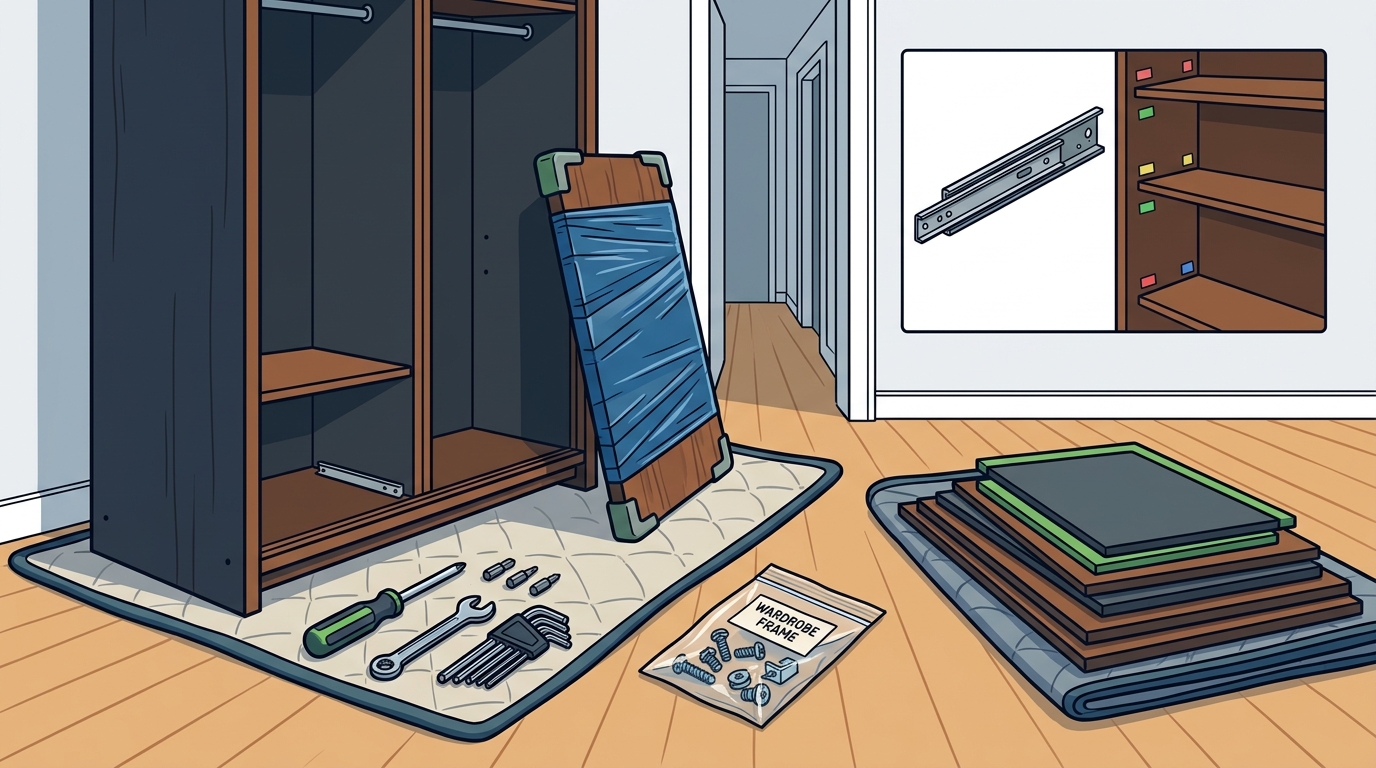
As you remove screws and bolts, place them immediately into labeled ziplock bags. Label each bag with the corresponding part name (e.g., "Leg A," "Drawer Slide Left") and the furniture item name. Tape the bag to the corresponding part or keep it in a central, secure container. Losing a single critical screw can render a piece of furniture unusable.
3. Strategic Dismantling
Work in reverse order of assembly. Typically, this means removing drawers, doors, and shelves first. Then, focus on the main structural frame. Use the appropriate tool for each fastener. If a joint is stuck, do not force it. Gently tap with a rubber mallet or apply a small amount of penetrating oil if metal is rusted. For wooden furniture, be cautious of splintering.
4. Protection and Wrapping
Once disassembled, wrap each piece in moving blankets or bubble wrap. Secure the wrapping with packing tape. For glass or mirror components, use cardboard corner protectors and extra padding. Label each wrapped item clearly with its destination room and part number.
For detailed guidance on packing fragile items, review our packing tips to ensure maximum protection.
Packing Strategies for Disassembled Parts
Proper packing of disassembled furniture requires more than just wrapping. It involves strategic placement within the moving truck to prevent shifting and damage.
- Heavy Items at the Bottom: Place heavier disassembled parts, such as bed frames or table legs, at the bottom of the truck or in sturdy boxes.
- Fill Void Spaces: Use soft items like pillows, linens, or towels to fill empty spaces in boxes containing hardware. This prevents movement during transit.
- Secure Loose Parts: Tape small hardware bags to larger parts or place them in a dedicated "hardware box" that is clearly labeled and easily accessible.
- Protect Edges: Use cardboard corner protectors on all exposed edges of wooden or metal frames to prevent dents and scratches.
At Oscar Mike Moving, we use high-quality moving blankets and shrink wrap to secure items in the truck. Our team ensures that heavy furniture is stacked securely to prevent collapse and that delicate parts are isolated from high-traffic areas in the truck.
Reassembly Guide for Common Items
Reassembling furniture can be daunting, but with your photos and organized hardware, it becomes a manageable task. Here are tips for common items:
Bed Frames
Start with the headboard and footboard. Attach the side rails to these pieces before lifting the frame. Ensure all slats are evenly spaced and securely clipped in. Test the stability before placing the mattress on top. If the bed squeaks, check for loose bolts or missing washers.
Office Desks
Assemble the base first, then attach the tabletop. Install drawers and cabinets last. Ensure all leveling feet are adjusted to keep the desk stable on uneven floors. Cable management clips can be installed during this stage to keep wires organized.
Sectional Sofas
Sectionals are often connected by brackets or pins. Align the sections carefully before securing the connectors. Use a helper to lift and position heavy sections. Once connected, test the seating for comfort and stability. If the sections shift, check the floor for unevenness.
For more complex reassembly needs, consider hiring professional movers who can handle the task efficiently and safely.
When to Call Professional Movers
While DIY disassembly is possible for simple items, certain situations require professional intervention. Large pianos, antique furniture, and complex office systems should be handled by experts. Attempting to disassemble these items without experience can lead to costly damage or personal injury.
Professional movers bring specialized equipment, such as piano boards, appliance dollies, and heavy-duty straps. They also have the experience to navigate tight spaces and stairwells safely. According to data from the Bureau of Labor Statistics, moving-related injuries are common among DIY movers, highlighting the importance of professional assistance for heavy or complex tasks.
Contact Oscar Mike Moving to discuss your specific needs. Our veteran-owned team is trained to handle all types of furniture with care and precision. We provide free estimates and transparent pricing to help you plan your budget effectively.
Key Takeaways
- Preparation is Key: Always take photos and organize hardware before starting disassembly.
- Use the Right Tools: Allen wrenches, screwdrivers, and power drills are essential for most furniture.
- Label Everything: Use ziplock bags and labels to keep track of screws and parts.
- Protect Your Items: Wrap disassembled parts in moving blankets to prevent scratches.
- Know Your Limits: Call professionals for heavy, complex, or valuable items.
- Reassembly Tips: Follow your photos and work in reverse order of assembly.
- Professional Help: Oscar Mike Moving offers expert disassembly and reassembly services.
Frequently Asked Questions
How do I keep track of screws during disassembly?
Use ziplock bags labeled with the part name and furniture item. Tape the bag to the corresponding part or keep them in a central container.
Can I disassemble a bed frame myself?
Yes, most bed frames can be disassembled with basic tools. Take photos and label all parts to ensure easy reassembly.
What is the best way to pack disassembled furniture?
Wrap each piece in moving blankets and secure with tape. Place heavy parts at the bottom of boxes or the truck.
Do I need to hire professionals for furniture disassembly?
For simple items, DIY is fine. For heavy, complex, or valuable items, professional help is recommended to prevent damage.
How long does it take to disassemble a large desk?
It typically takes 30 to 60 minutes for a standard office desk, depending on complexity and experience.
What should I do if I lose a screw?
Check the hardware store for matching screws or contact the furniture manufacturer for replacements. Do not use incorrect sizes.
Can Oscar Mike Moving help with reassembly?
Yes, our team provides full disassembly and reassembly services as part of our moving packages.
Get Your Free Moving Estimate
Ready to move with confidence? Let the veteran-owned experts at Oscar Mike Moving handle the heavy lifting. We provide comprehensive moving services in Richardson, TX, and the greater Dallas-Fort Worth area. Our team is dedicated to protecting your belongings and ensuring a smooth transition to your new home.
Contact us today to schedule your free estimate and experience the Oscar Mike difference.